The twentieth century's greatest mathematician, Alexander Grothendieck, once insisted that the study of 'form' fascinated him above the study of 'number' or 'size'. By uncovering hidden concepts underlying our everyday use of numbers and measurements, this course will take you on a spectacular journey through the cathedral of mathematics.
How to Think Like a Mathematician
Course Description
How to Think Like a Mathematician is an invitation to see mathematics not as a set of formulas or calculations, but as a way of thinking about the world.
Drawing inspiration from thinkers such as Alexander Grothendieck, this course explores mathematics as the study of form, structure, and meaning.
Beginning with the simple act of counting, you’ll uncover how abstraction and symbolism allow us to move from everyday experiences to powerful mathematical ideas.
Designed for anyone curious about how mathematical thinking works, this course assumes no prior knowledge beyond basic counting and a willingness to explore new ideas.
Through discussion and guided explanation, you’ll journey through key concepts that underpin modern mathematics, learning how mathematicians identify what truly matters, express ideas precisely, and build elegant representations of complex reality.
.png)
Course Structure
The course begins by examining how humans naturally think mathematically, starting with counting, symbols, and the leap from concrete objects to abstract ideas.
From there, you’ll explore how mathematicians use abstraction, compression, and generalisation to reveal underlying patterns and structure.
Along the way, the course looks at number systems, symbolic representation, and the evolution of mathematical thought from Descartes to modern developments.
As the course progresses, attention shifts to how mathematical knowledge is organised and communicated, focusing on rigor, clarity, and structure rather than calculation.
Throughout the sessions, ideas are unpacked through explanation, examples, and open discussion, helping participants develop confidence in thinking mathematically and seeing the world through a more structured, conceptual lens.
.png)
Course Learning Outcomes
By the end of this course, students will be able to:
- Understand mathematics as a way of thinking, not just calculating
- Recognise the role of abstraction and symbols in representing ideas
- Identify essential structures and patterns within complex information
- Appreciate how mathematicians generalise ideas in meaningful ways
- Understand different number systems and their purposes
- Develop clearer, more rigorous ways of expressing ideas
- Gain confidence engaging with mathematical and abstract concepts.
Your tutor is Isaac Nakone
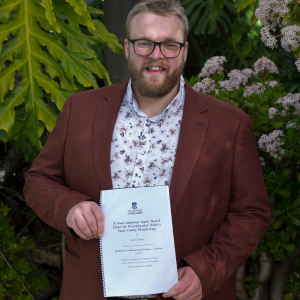
Isaac Nakone has been teaching at WEA since 2026.
Isaac holds a Bachelor of Mathematical Sciences (Honours) and a Bachelor of Science, and is currently completing a Master of Mathematical Sciences with a major in pure mathematics. His academic background spans solid state physics simulations and a novel Honours thesis exploring algebraic techniques in mathematical biology.
With a strong interest in making complex ideas accessible, Isaac is passionate about breaking down challenging mathematical concepts into clear, intuitive explanations. His current research is focused on the theory of cobordism, with the long-term aim of applying advanced mathematical frameworks to model biological phenomena. Through his teaching, Isaac encourages curiosity, clarity, and confidence in mathematical thinking.

|